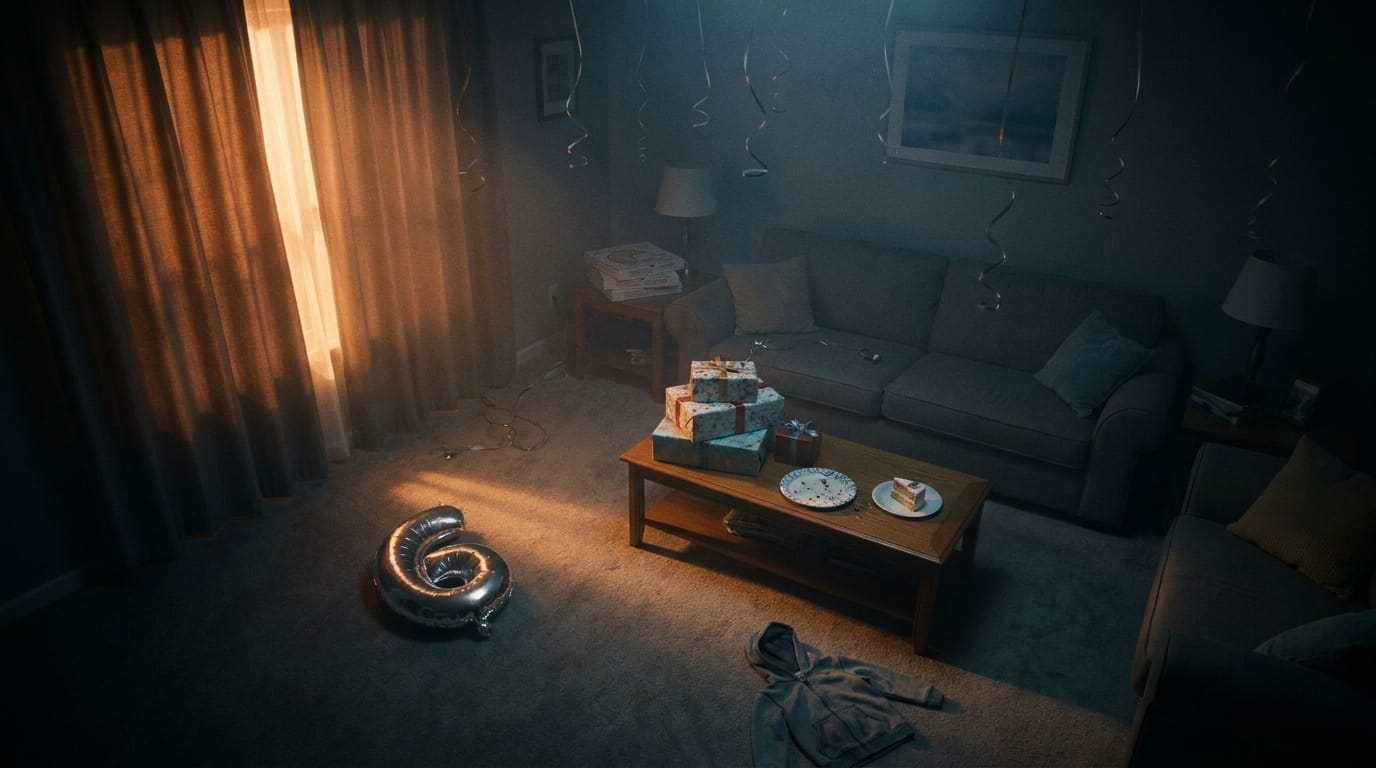
Maybe it was a birthday. Maybe a game, or a Sunday you'd promised someone you'd be there for. You came off three nights in a row. The last call ran into the start of the next shift, so really it was closer to four. You told them you needed an hour. They told you it started at two.
They woke you at four.
By the time you walked into the kitchen, the day was already over. Nobody said much, which was worse than if they had.
That's the moment a lot of people on nights realize something is actually wrong. Not the normal kind of tired. Something underneath it.
What you've probably told yourself
You've been doing this a while. Three twelve-hour nights a week, sometimes four when you're short. Night shift is hard, everyone knows that. The part that doesn't add up is why you keep getting worse at it.
It used to take a day to come back. Then two. Then it started taking whole weekends. Now you can sleep fourteen hours after a run of nights and still wake up feeling like you got hit by a truck.
So you go after the sleep. Melatonin, 3mg, then 5, then 10. Magnesium. Ashwagandha. Blackout curtains, eye mask, earplugs, white noise. You cut the caffeine after shift. You try sleeping in two blocks, then one long one.
You ask your doctor. He tells you to get more sleep. You ask him when.

Every fix works for a couple of weeks, then stops. Add it up over a few years and it's hundreds of dollars, sometimes a couple of thousand, on things that never touched the real problem. It's easy to feel stupid about it, like you're the only one who can't work it out.
You're not. And it was never a sleep problem.
What's actually happening
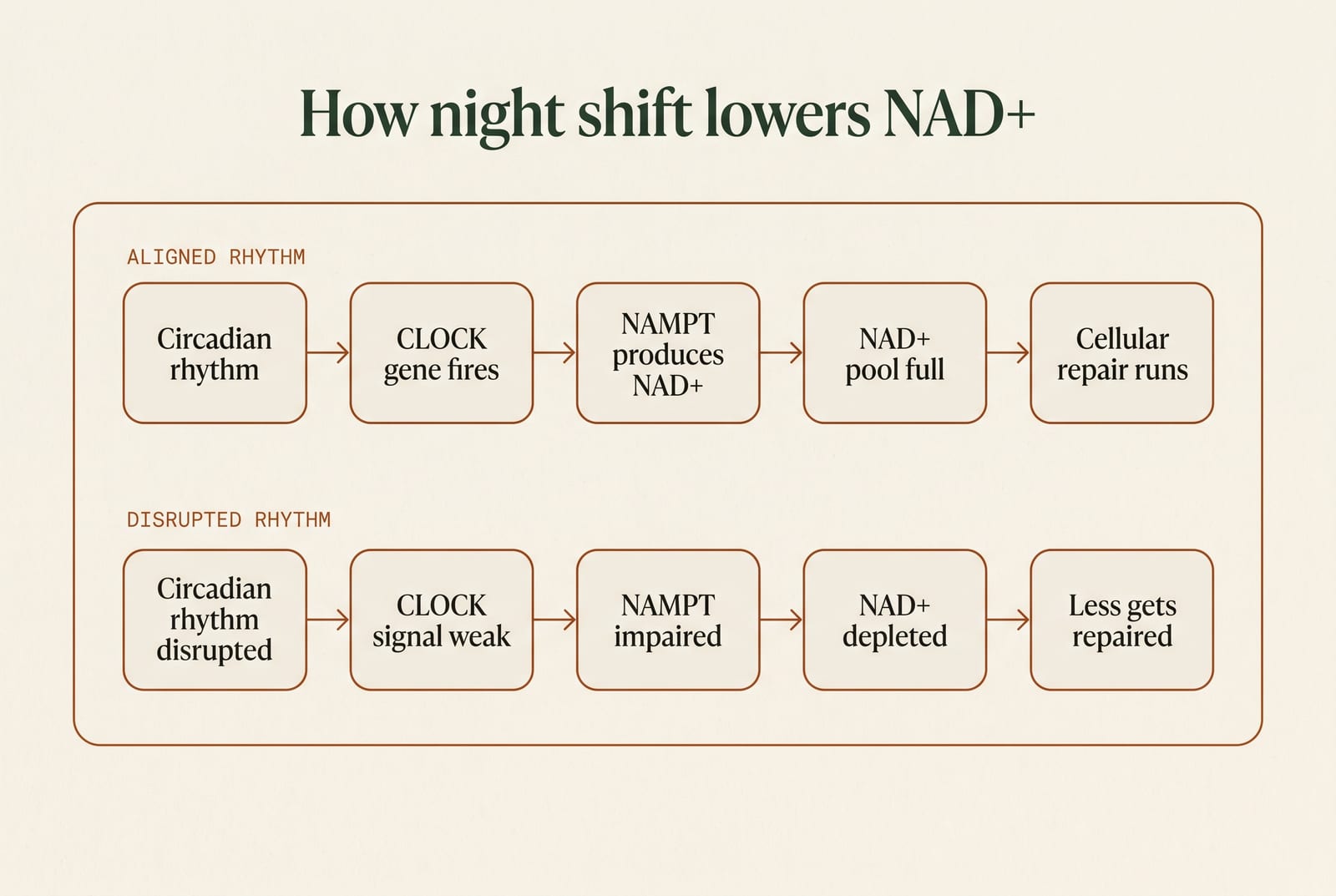
Your body runs most of its overnight repair on a single molecule. Energy, cellular recovery, the maintenance that's meant to happen while you're out. It's a coenzyme called NAD+.
Night shifts disrupt how you make it.
NAD+ is produced on a daily rhythm tied to your body clock. Break the clock, and the production seems to break with it. Circadian disruption is associated with measurably lower NAD+. You can sleep ten hours at the wrong time of day and still not make what you used to.
That's why every sleep hack only worked for a week. You were getting more sleep. You just weren't refilling the tank.
The part in your favor
NAD+ is the thing that runs low. NMN is the input you can put back. You take NMN, your body converts it into NAD+. That's the whole idea.
Here's why a lot of people try NMN and feel nothing. The bottle.
Good NMN, at the dose the research actually used, is a different thing from most of what's on the shelf.
What to look for
When you read about NMN properly, the dose that keeps coming up is around 500mg. That's what the human studies tended to use. Lower doses tend to be companies saving money. And you want one that's actually been measured, not just bottled.
Worth being straight about: NMN won't make 4am easier. It isn't a fix for the night itself. The work is still the work. The part people are actually after is what comes after the work. The day after the night. The weekend after a run of three. That's the piece that's supposed to come back, and stops.
Why we built this
We're Stratus Labs. We make the NMN this page is about, and we built it for one reason: the supplement aisle is full of NMN that's underdosed, blended into a stack, or never tested, and none of it was made for people whose clocks are wrecked by the schedule.
So ours is one ingredient. 500mg per capsule, the dose the studies used. Every batch is third-party tested, and we post the results on the certificate page with the batch number.
None of that is unique. It's just the stuff the supplement companies you've been burned by don't bother doing.
Try it for the cost of what didn't work
You can get the 90-day supply for about $1.39 a day on subscription. If you've been buying melatonin and magnesium that did nothing, you've likely been spending more than that, for years, on the wrong problem.
The 60-day guarantee is what makes it easy. Take it for two months. If you feel nothing, send back whatever's left and you get refunded, and you keep the bottle. It's hard to make it lower-risk than that.
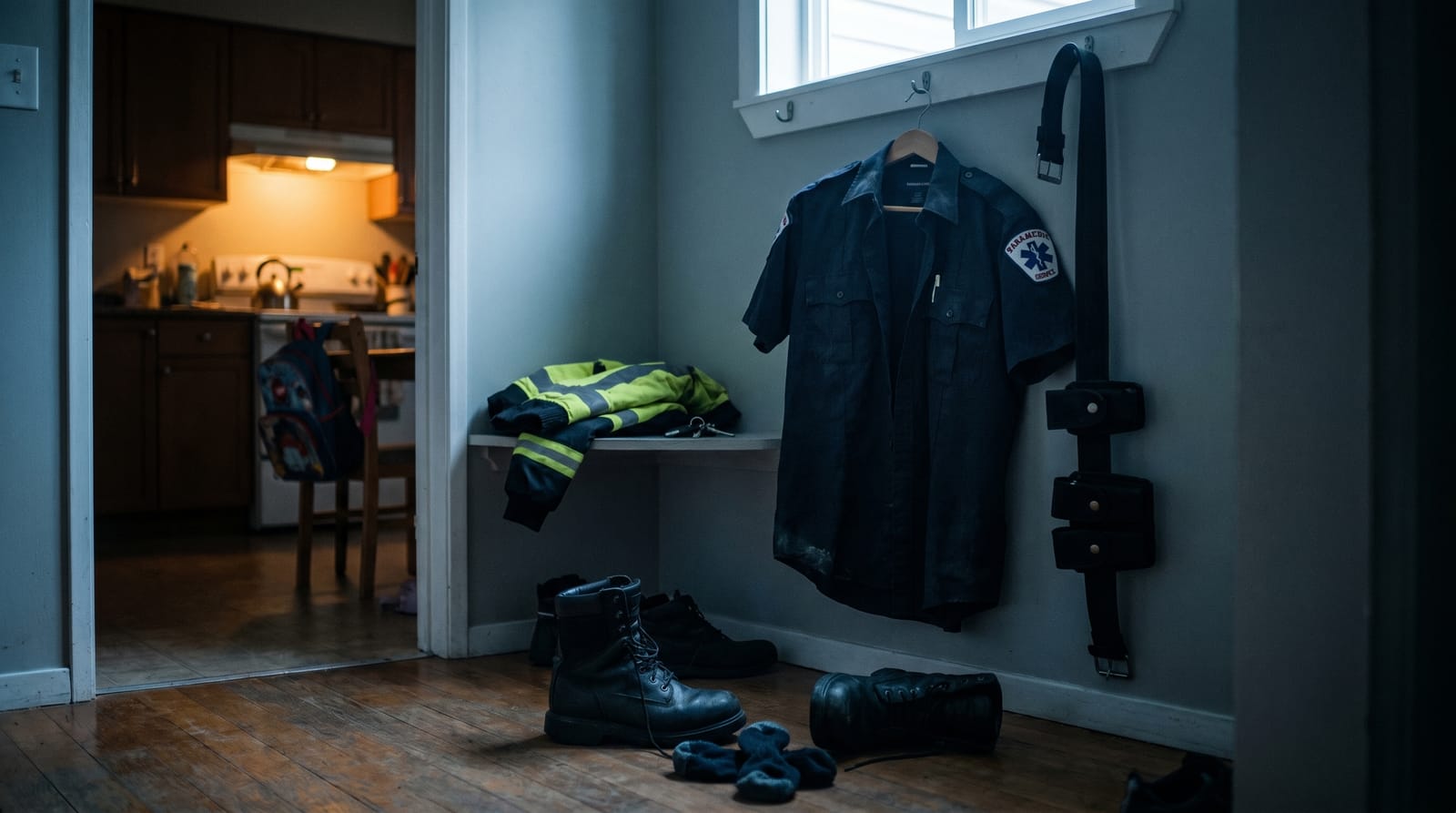
If you work nights, you already know what this is about. The weekends that don't feel like weekends. The way the people you love stop expecting you to make it. The slow build of becoming someone you don't recognize. The partner who learns not to plan things on your days off, because off stopped meaning off.
You can't avoid everything night shift does. The work is the work. But you might stop losing the days that were supposed to belong to the people you're doing it all for.
That's the only reason we'd bring it up.
P.S. This doesn't change the job. You'll still work nights, and 4am will still be 4am. What it gives back is the day after, and the weekend after a run of three. If you work nights, you know what that's worth. The guarantee runs 60 days, so finding out costs you nothing but the two months it takes to feel it.